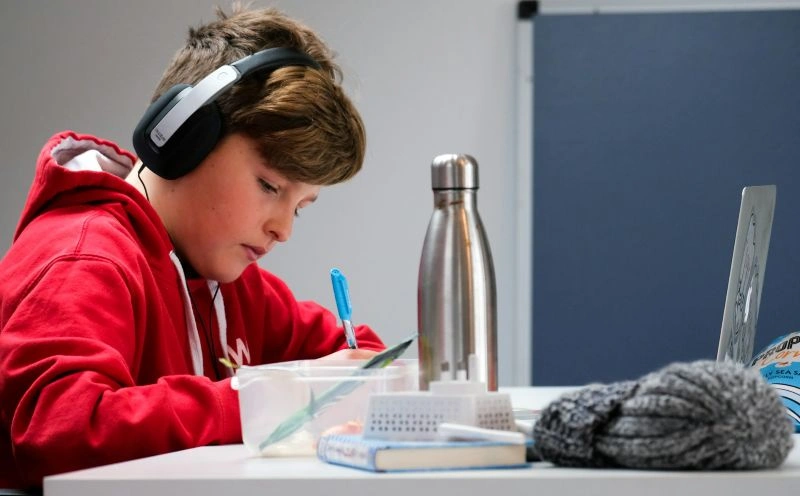
A personalized learning program adapts instruction to each student’s individual pace, strengths, and goals – moving away from uniform lessons that work for some but leave others behind. Schools that implement these systems see stronger student engagement, better academic results, and learners who are far more prepared for higher education and life beyond the classroom. At Rawafed Private School in Abu Dhabi, this student-centered philosophy sits at the heart of how education is delivered every day.
Not every student absorbs information at the same speed, in the same way, or with the same level of prior knowledge. For decades, traditional schooling largely ignored this reality – teachers delivered the same content, at the same time, to rooms full of students with entirely different learning profiles. The gap between what students actually need and what they receive has pushed schools to rethink the whole model. Forward-thinking institutions are now designing systems built around the individual child, not the other way around.
What Is a Personalized Learning Program in Education?
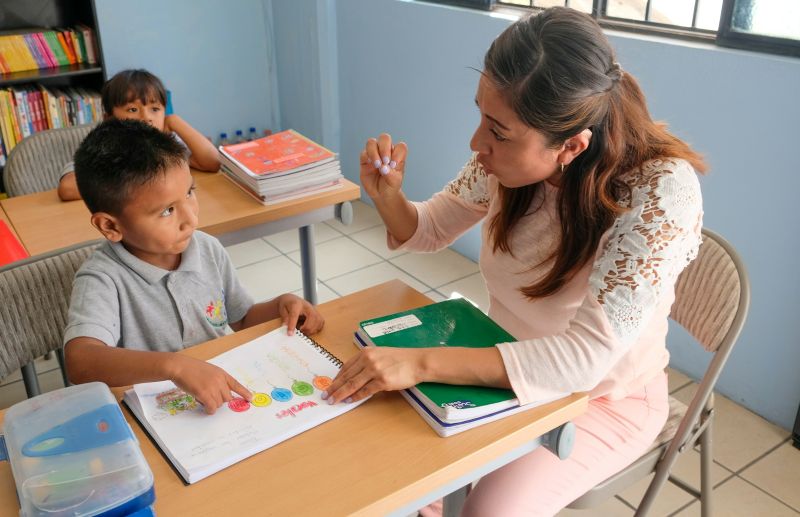
A personalized learning program is an educational approach that tailors the content, pace, and method of teaching to each student’s specific strengths, gaps, and interests. Rather than every learner covering the same material at the same speed, students move through the curriculum according to what they already know – and what they still need to master. Teachers play a facilitative role, guiding students through self-directed goals rather than just delivering fixed lessons to a passive group.
The model places significant responsibility on students, too. They become active participants in their own academic progress – setting targets, tracking outcomes, and engaging with materials that genuinely match where they are in their learning.
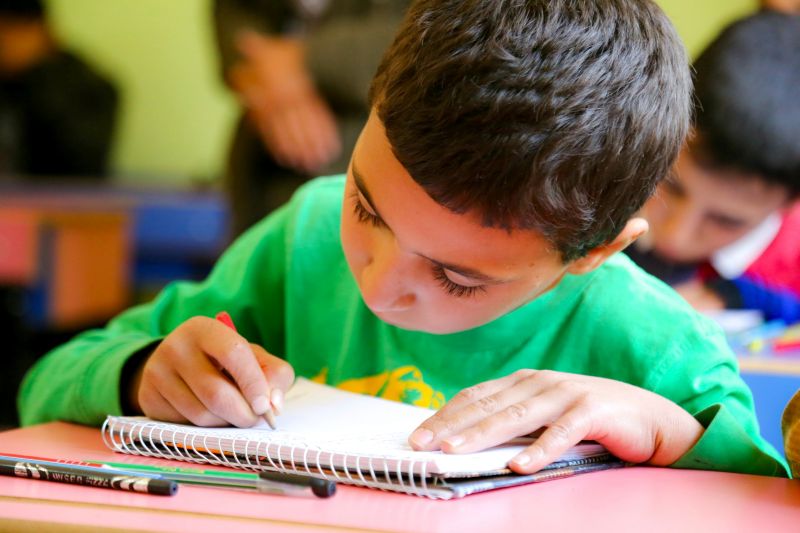
Personalized Learning Programs vs Traditional Education
The differences between the two approaches go deeper than just teaching style.
|
Feature |
Traditional Education |
Personalized Learning Programs |
|
Pace |
Fixed for the whole class |
Set by an individual student |
|
Content delivery |
One curriculum for all |
Adapted to the student level |
|
Assessment |
Standardized testing |
Ongoing, competency-based |
|
Student role |
Passive recipient |
Active, self-directed learner |
|
Teacher role |
Lecturer |
Coach and facilitator |
|
Technology use |
Limited |
Integrated and data-driven |
In a traditional setting, a student who masters fractions quickly still waits for the rest of the class. In a personalized system, that same student advances immediately – while a peer who needs more time gets it, without the pressure to keep up or fall behind publicly.
Why Schools Are Adopting Personalized Learning Program Systems
The shift toward student-centered learning isn’t a trend – it reflects a genuine reckoning with the limitations of standardized instruction. A 2025 systematic review published in Discover Artificial Intelligence (Springer Nature), analyzing 125 studies conducted between 2015 and 2025, found that AI-based personalized learning systems consistently improved student motivation, retention, and academic performance across K–12 and higher education settings.
A separate meta-analysis of AI-assisted adaptive learning interventions found a medium-to-large positive effect size (g = 0.70) on cognitive learning outcomes compared to non-adaptive instruction – a meaningful gap by any academic measure.
Schools that commit to personalized learning programs consistently report improved engagement, fewer students falling through the cracks, and a stronger alignment between what’s being taught and what individual students actually need at any given moment. Explore the curriculum at Rawafed Private School to see how this philosophy shapes what students learn from KG through Grade 12.
How Personalized Learning Programs Work in Schools
The mechanics of a personalized system depend on three interconnected practices:
- Ongoing assessment: Teachers use frequent, low-stakes checks to understand exactly where each student stands – not just at the end of a term, but throughout the learning process. This data shapes what comes next.
- Flexible grouping: Students work in small groups, one-on-one with teachers, or independently based on what each learning moment requires. These groupings shift often and aren’t fixed by ability labels.
- Student-driven goal setting: Learners are involved in identifying what they want to achieve, how they’ll get there, and how they’ll demonstrate mastery. This builds accountability and makes academic goals feel meaningful.
What’s often underestimated is how much this changes the classroom dynamic – not just for students, but for teachers. Educators spend less time delivering content to a passive audience and more time working closely with individual students or small groups on specific challenges. It requires more planning, but it produces far more targeted instruction.
Digital Tools Supporting Personalized Learning Programs
Technology plays a central role in making personalized learning programs scalable across an entire school. Without the right platforms, tracking individual progress across hundreds of students would be unmanageable. The tools that make this possible include:
- Adaptive learning platforms – software that adjusts the difficulty and type of questions based on a student’s previous responses, so the challenge level is always appropriate
- Learning management systems (LMS) – centralized platforms where teachers assign differentiated content, track completion, and communicate with students individually
- Data dashboards – real-time views of student progress that allow teachers and school leaders to identify who needs intervention before a small gap becomes a serious problem
- Digital portfolios – tools that let students document their own learning journey, reflect on growth, and present evidence of what they’ve achieved over time
At Rawafed Private School, MAP (Measures of Academic Progress) testing is embedded across the curriculum as a tool to generate individual data on each student’s growth – giving teachers clear, actionable information to guide instruction at a personal level. Learn more about the school’s accreditations and quality standards.
Benefits of Personalized Learning Programs for Students and Schools
The case for moving to a personalized model is built on concrete advantages:
- Higher engagement: Students are more motivated when the material matches their interests and current level. The work feels neither too easy nor impossible.
- Better outcomes for struggling learners: Students who enter below grade level get targeted support without being labeled or separated. They catch up more efficiently when instruction meets them where they are.
- Advanced students aren’t held back: High achievers can accelerate through material they’ve mastered and dive deeper into areas that genuinely challenge them.
- Stronger student ownership: When learners set their own goals and track their own progress, they develop habits of self-direction that matter well beyond school.
- Teacher effectiveness improves: Data-informed teaching reduces guesswork. Educators know which students need what kind of support, and they can act on that knowledge immediately.
For schools like Rawafed, these benefits align directly with the broader mission: preparing every student – from KG through Grade 12 – to thrive academically, personally, and eventually in universities across the U.S., U.K., and beyond.
Implementing Personalized Learning at Rawafed School
A Student-Centered Philosophy Built Into the Curriculum
Rawafed Private School’s commitment to individual student growth isn’t a recent addition to the school model – it’s woven into the school’s foundational mission. With over 1,700 students from pre-kindergarten through Grade 12, delivering truly personalized learning programs requires a system, not just a mindset. The American curriculum framework, combined with Cognia accreditation, provides the structural backbone for flexible, student-focused instruction.
Teachers at Rawafed are trained to use assessment data – including MAP testing results – to adjust their instructional approaches for individual learners. The goal at each phase of schooling is to ensure that every student can move forward from where they currently are, not simply where the curriculum expects them to be
From Early Years Through University Preparation
The model scales differently across the school’s phases. In the early years, personalization focuses on literacy, numeracy, and language development – identifying each child’s developmental pace and building strong foundations before advancing. In the middle school years, students begin taking more ownership of their academic goals, with structured support helping them understand their own learning profiles.
By the time students reach Grades 11 and 12, the personalized framework shifts toward university preparation – with AP courses, SAT and TOEFL readiness, and individual academic counseling guiding each student toward the right higher education pathway. Many Rawafed graduates go on to universities in the U.S., U.K., Canada, Europe, and Australia – a result that reflects years of targeted, student-specific preparation. Discover more about the student experience at Rawafed
Building the Future, One Student at a Time
The shift from one-size-fits-all schooling to genuinely adaptive education is one of the most meaningful changes happening in schools today. A well-designed personalized learning program doesn’t just improve test scores – it changes how students relate to learning itself, building confidence, curiosity, and the self-direction skills that matter in university and beyond.
At Rawafed Private School in Abu Dhabi, the commitment to student-centered education runs through every phase of schooling. For families seeking a school where every child is seen, supported, and challenged at the right level, start with Rawafed’s admission procedure to take the next step.
Frequently Asked Questions
What is the difference between personalized learning and differentiated instruction?
Differentiated instruction adapts how teachers deliver content to groups. Personalized learning goes further – students shape their own pace and goals, with the system responding to their individual data over time.
Does personalized learning work for students with learning difficulties?
Yes. When instruction matches a student’s actual level and allows time for genuine mastery, gaps close more reliably than in a fixed-pace classroom. The system responds to the student rather than asking the student to conform.
How do teachers manage personalized learning across a full classroom?
Adaptive platforms and data dashboards allow teachers to monitor individual progress without tracking everything manually. Class time shifts toward small-group work and one-on-one sessions guided by real-time data.
Does personalized learning mean students spend more time on screens?
Not necessarily. Digital tools inform decisions; they don’t replace teaching. Students still have direct teacher time, collaborative peer work, and hands-on learning. Implementation quality determines the balance.
How are students assessed in a personal learning program?
Assessment is ongoing rather than end-of-term – using frequent low-stakes checks, project work, and teacher observations that give a running picture of each student’s progress and allow real-time instructional adjustments.