Language and literacy grow side by side during a child’s first years of life. Long before a child sounds out a word, the brain is already absorbing rhythm, vocabulary, and meaning from everyday talk, songs, and shared books. This early groundwork, not formal reading instruction, predicts how easily a child will read, write, and communicate later on.
That connection between talking, listening, and reading is what this article looks at. At Rawafed School, this pattern shows up daily in early years classrooms: children surrounded by rich language tend to move into formal reading with more confidence than those meeting books and letters for the first time in kindergarten. Below is a look at what this foundation involves, how families can support it at home, and how our American curriculum approach builds on it.
Why the Early Years Matter Most for Language and Literacy
The first five to six years of life are when the brain builds the pathways that support reading, writing, and speaking for a lifetime. During this window, children typically:
- Absorb new words and sounds faster than at any later stage
- Build listening comprehension before decoding print
- Form the phonological awareness that later supports sounding out words
This is why what happens before formal reading instruction matters just as much as what comes after.
There is also a strong, documented link between this early foundation and long-term academic outcomes. A 2025 longitudinal study in the Journal of Intelligence followed children from the Quebec Longitudinal Study of Child Development birth cohort and found that toddlers regularly exposed to shared reading, picture books, and pretend writing at age two showed measurably stronger student engagement years later, tracked from kindergarten through the end of high school.
None of this happens in isolation. A classroom can model rich language and structure, but a child’s daily home life, conversations at the table, bedtime stories, and songs in the car carry just as much weight. When schools and families reinforce the same habits, children grow into more confident readers, writers, and speakers.
What Are Early Literacy Skills?
This term covers the abilities children build before they can read or write conventionally. In practice, that usually includes:
- Recognizing that print carries meaning
- Understanding that stories have a beginning, middle, and end
- Noticing that words are made of separate sounds
- Knowing how to hold a book and turn its pages
These form the base layer that formal reading instruction is later built on top of.
Early Literacy vs. Learning to Read
Learning to read is the technical process of decoding letters into sounds and words, usually starting around ages five or six. What comes before it includes listening comprehension, vocabulary growth, and phonological awareness, the sense of how sounds work within words. A child who cannot yet read a single word can still be strong in this area if they can retell a story or notice that “cat” and “hat” rhyme.
Building Early Literacy and Language Skills at Home
Families do not need flashcards or a formal curriculum for this. Building early literacy and language skills at home mostly comes down to consistency, conversation, and a bit of intention behind ordinary moments.
Reading Aloud Every Day
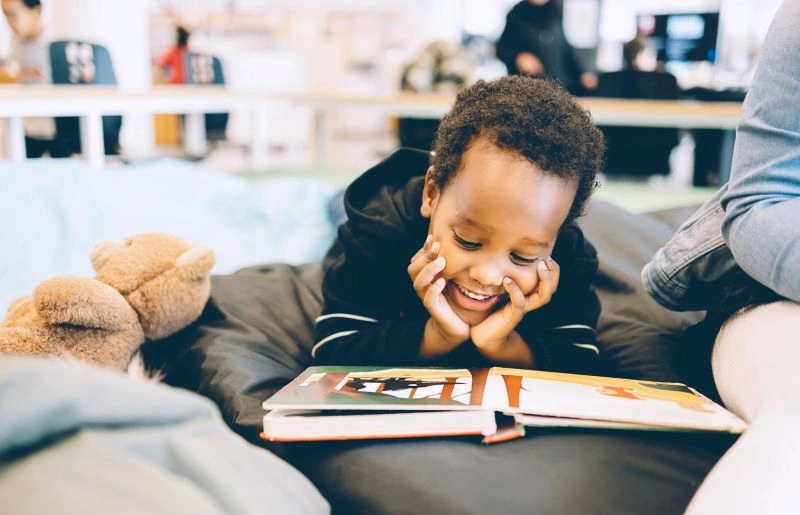
A short session, even ten minutes before bed, exposes children to vocabulary and story patterns they would not hear in everyday speech. Rereading a favorite book helps children predict and eventually “read” along from memory.
Talking Throughout Everyday Routines
Narrating simple tasks, like describing what’s happening while cooking or getting dressed, gives children a steady stream of new words tied to real experience. This back-and-forth talk, sometimes called a “conversational duet,” is linked to stronger vocabulary growth in young children.
Singing Songs and Nursery Rhymes
Rhymes and songs train the ear to notice syllables and repeated sounds, building phonological awareness naturally and without pressure. This is one of the simplest ways of developing early literacy skills, since it rarely feels like a lesson to the child.
Encouraging Storytelling and Imaginative Play
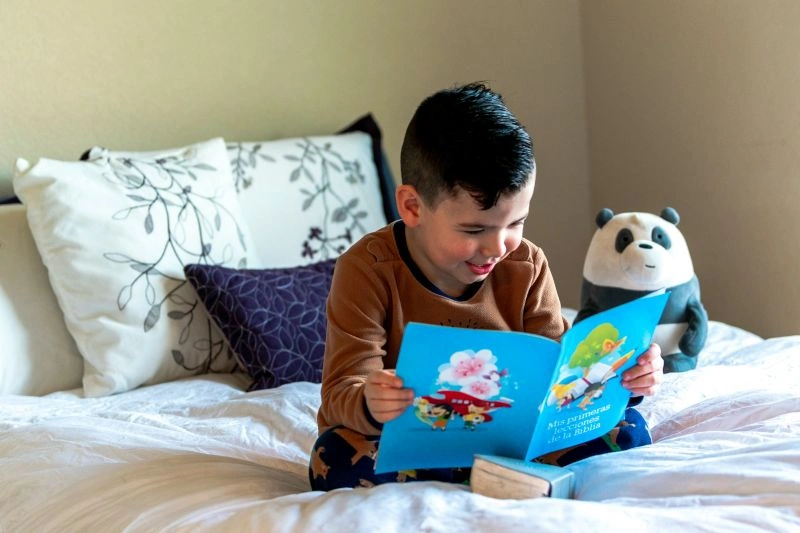
When children invent stories or act out scenes with toys, they practice sequencing events and using descriptive language, both core parts of later writing and comprehension.
Asking Open-Ended Questions During Reading
Instead of only naming objects in a picture, questions like “What do you think happens next?” push children toward reasoning and richer vocabulary, both of which support developing early literacy skills over time.
Everyday Activities That Strengthen This Foundation
Beyond home routines, certain hands-on activities play a steady role in developing early literacy skills, giving children low-pressure practice with sounds, letters, and meaning.
- Picture book discussions: Talking about illustrations and feelings builds comprehension beyond simply naming pictures.
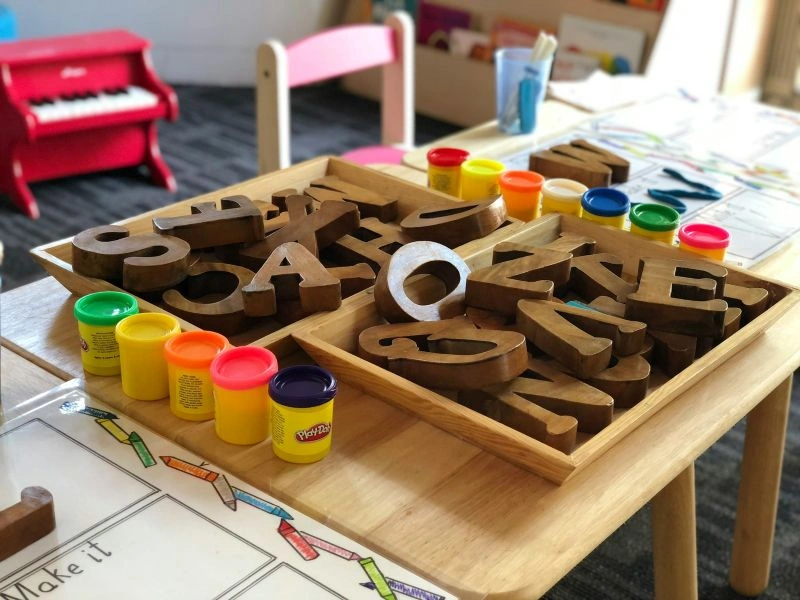
- Alphabet and sound games: Spotting a letter or its matching sound builds the phonics foundation needed for decoding.
- Matching words with images: Pairing written words with pictures helps children connect print to meaning.
- Rhyming activities: Clapping out syllables strengthens the same phonological awareness that songs build.
- Creative drawing and early writing: Scribbling and early letter attempts build fine motor skills tied to future handwriting.
Recent research supports how broadly these activities pay off. A related analysis of the same cohort found that toddler literacy stimulation was also linked to stronger motor skill development at school entry, suggesting these habits support more than reading alone.
How American Curriculum Schools Build Strong Early Literacy Skills
An American curriculum approach, like the one at Rawafed School, builds this foundation through everyday classroom experience, not isolated drills, supported by strong accreditation standards.
Student-Centered Learning in the Early Years
Classrooms are arranged around each child’s pace, letting teachers introduce vocabulary, books, and writing tools in ways that match what a child is already curious about.
Balanced Literacy Through Reading, Writing, Speaking, and Listening
Rather than isolating reading as a single subject, balanced literacy weaves reading, writing, speaking, and listening together throughout the day, so each skill reinforces the rest.
Small-Group Instruction That Meets Individual Learning Needs
Working in smaller groups lets teachers notice exactly where a child is in their language development and adjust activities accordingly, something harder to do in a large, whole-class setting.
Inquiry-Based Learning That Encourages Language Development
When children are encouraged to ask questions and investigate topics that interest them, they naturally use more descriptive language and build vocabulary tied to real curiosity.
Literacy Integrated Across All Subject Areas
This foundation is not confined to a single reading block. Counting games in math and describing observations in science give children repeated chances to practice language in different contexts.
Strong Literacy Foundations Begin in the Early Years
Early literacy skills and language growth are deeply connected, and both take shape long before a child reads independently. Everyday conversation, reading aloud, songs, and play all lay the groundwork for stronger communication, comprehension, and academic performance later on. Recent longitudinal research backs this up, linking early literacy exposure in toddlerhood to engagement that stretches into the school years.
Neither families nor schools carry this work alone. Building early literacy and language skills works best when home routines and classroom instruction reinforce each other, and this same foundation carries forward into primary school success. A structured school approach, paired with families who talk, read, and play with intention, gives children the strongest start toward becoming confident readers and communicators. Families ready to see this in action can learn more about admissions at Rawafed School.
Frequently Asked Questions
What are the key literacy-related skills every child should develop early on?
The core skills include vocabulary knowledge, listening comprehension, print awareness, and phonological awareness. These build gradually through talk, reading, and play, well before formal instruction begins.
At what age should this development start?
It begins at birth. Babies absorb language patterns from the sounds and conversations around them, and this early exposure shapes vocabulary and comprehension years later.
How can parents help without formal teaching?
Reading aloud daily, narrating routines, singing songs, and asking open-ended questions during shared reading all support growth naturally, with no worksheets required.
What is the difference between early literacy and learning to read?
Learning to read is the technical skill of decoding letters into words, usually starting around age five or six. What comes before it includes vocabulary, listening skills, and sound awareness.
Why is talking to babies and toddlers important later on?
Frequent, responsive conversation exposes children to new words and sentence patterns, and research consistently links this early language input to stronger reading-related skills years down the line.