The CDC’s Data and Statistics on Children’s Mental Health, based on 2022-2023 US national survey data, reports that 8% of children aged 3-17 have a current, diagnosed behaviour disorder, making it one of the most common childhood mental health conditions. Behind that number are thousands of parents asking the same quiet question: is this just a phase?
It often starts with a phone call from school. Your child pushed a classmate, threw a chair, or said something frightening. At home, the slammed doors and screaming matches are becoming harder to explain away.
The good news is that anger itself is normal. Every child argues, sulks, and melts down sometimes. The difference between ordinary frustration and a real concern lies in how often aggression happens, how intense it is, how long it lasts, and what harm it causes. This guide shows parents which signs of aggressive behaviour in children matter, what usually drives them, and how to respond before small patterns become big problems.
What Is Aggressive Behaviour in Children?
Aggressive behaviour in children is any action meant to hurt, intimidate, threaten, or cause harm to another person, an animal, or property, such as a child who hits a sibling to get a toy or threatens a classmate after losing a game. It can be physical, verbal, or relational, and it may show up at home, at school, or with friends.
Aggression is not the same as feeling angry, standing up for yourself, or having the occasional disagreement:
| Behaviour | What It Looks Like | Is It Aggression? |
|---|---|---|
| Normal frustration | Crying, sulking, or stomping off after a disappointment | No, it’s an emotional reaction |
| Assertiveness | “That’s mine, please give it back” | No, it’s a healthy way to set boundaries |
| Occasional disagreement | Arguing with a sibling over a game | Usually not, if no one is hurt or threatened |
| Aggression | Hitting, threatening, or deliberately humiliating someone | Yes, the aim is to hurt or control |
- Note: Aggressive behaviour does not automatically mean a child has a mental health disorder, and it is not proof of poor parenting. Before drawing conclusions, look at the circumstances: what happened just before, who was involved, and whether it fits a pattern.
Physical Aggression
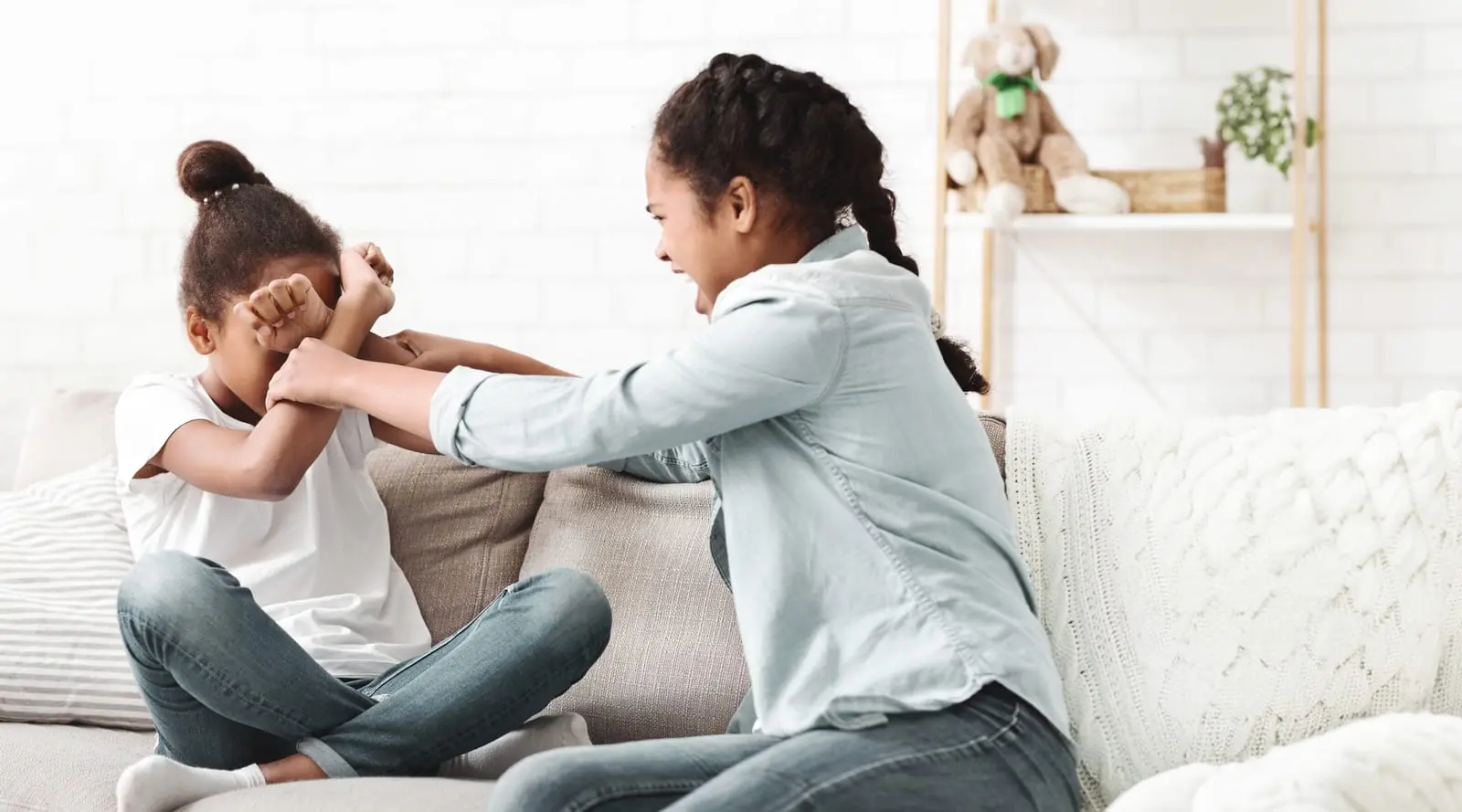
Physical aggression is the easiest type to spot. It includes hitting, kicking, biting, pushing, or throwing objects at others, damaging property during conflicts, and using force to express anger or take something from another child. Younger children show it most, often because they don’t yet have the words to express big feelings.
Verbal Aggression
Verbal aggression uses words as weapons. It includes threats, insults, deliberate intimidation, hostile shouting aimed at classmates, siblings, or adults, and hurtful language during disagreements. A child who regularly says “I’ll hurt you” or mocks others to make them cry is showing verbal aggression, even if they never lift a hand.
Relational and Social Aggression
Relational aggression damages relationships rather than bodies. It includes deliberately excluding classmates to hurt them, spreading rumours, encouraging others to reject someone, and using friendships to control or intimidate peers. Because it is quieter, adults often miss it, even though it can be just as painful as physical aggression.
Not every raised voice, rough game, or left-out moment counts as aggression. Intent, context, developmental stage, and repeated patterns are what turn ordinary childhood friction into a real concern.
What Are the Early Warning Signs of Aggressive Behaviour in Children?
The early warning signs of aggressive behaviour in children are patterns parents can actually see and count: outbursts that happen often, harm that keeps repeating, and incidents that grow worse over time. One bad day tells you very little. Seven weeks of similar bad days tells you a lot.
1. Frequent and Intense Angry Outbursts
Outbursts become a warning sign when they happen several times a week, last a long time, or seem far bigger than the trigger. A child who screams for 30 minutes because their sandwich was cut the “wrong” way, day after day, is struggling more than a child who has an occasional meltdown when tired. Watch for outbursts that leave others frightened or hurt.
2. Repeated Physical Conflicts With Other Children
One playground scuffle is common. Regular hitting, pushing, or kicking, especially with different children, is not. If teachers report physical incidents most weeks, or other parents start keeping their children away, the pattern deserves attention, even if your child says the others “started it.”
3. Threatening or Intimidating Language
Threats such as “I’ll hurt you” or “You’ll be sorry” should always be taken seriously, even when a child says they were joking. Pay particular attention if your child uses threats to get their way, frightens younger siblings, or seems to enjoy making others afraid. Words that are meant to scare are a form of aggression, not just rudeness.
4. Deliberate Destruction of Property
Breaking a toy in a moment of frustration happens. Deliberately smashing a sibling’s things, tearing up schoolwork, or damaging furniture during conflicts is different. When destruction is targeted, repeated, or used as revenge, it shows a child is using harm to express anger or gain control.
5. Difficulty Accepting Limits or Managing Frustration
Some aggressive kids react to almost every “no” as an attack. They may lash out when asked to stop screen time, finish homework, or wait their turn. If ordinary limits regularly lead to hitting, throwing, or threats, the issue is usually frustration tolerance rather than simple defiance.
6. Persistent Hostility Toward Family Members or Classmates
A child who seems angry most of the time, not just in specific moments, may be carrying more than they can manage. Look for constant irritability, blaming others for everything, cruelty toward siblings or pets, or a growing list of classmates they “hate.” Persistent hostility often signals stress, insecurity, or unmet emotional needs.
7. Increasing Frequency or Severity of Aggressive Incidents
The most important sign is direction. If incidents are happening more often, causing more harm, or involving more dangerous behaviour than a few months ago, it’s time to act, even if each incident on its own seemed manageable.
- Tip: Keep a simple behaviour diary for two to three weeks. Note the date, time, what happened just before, what your child did, and how it ended. Patterns that feel random in the moment often become clear on paper, and the diary is invaluable when you talk to teachers or a doctor.
What Causes Aggressive Behaviour in Children?
Aggression in children usually grows from several overlapping factors rather than one single cause. Like many behavioural issues in children, it is often a sign that a child is struggling with something they can’t yet name or manage. Common contributing factors include:
- Emotional regulation difficulties: struggling to express anger, disappointment, or frustration in appropriate ways.
- Family stress: big changes at home, such as a new sibling, divorce, or moving to a new country and school, as well as ongoing conflict or emotional insecurity.
- School-related challenges: bullying, peer pressure, academic stress, or difficulty making friends. Steady, calm study routines that reduce school stress can ease some of that pressure.
- Environmental influences: regularly seeing aggressive behaviour or unhealthy ways of resolving conflict at home, among peers, or in media.
- Developmental or mental health factors: difficulties with impulse control, communication, or emotional well-being.
- Physical factors: too little sleep, tiredness, hunger, or physical discomfort.
Understanding why a child becomes aggressive is not the same as excusing the behaviour; it is the first step toward changing it.
How Does Aggressive Behaviour in Children Change With Age?
Aggressive behaviour in children looks different at each stage of development, so what is typical at two can be a concern at ten. Toddlers often hit or bite because they can’t yet explain what they feel, and aggression usually drops as language skills grow and children learn other ways to communicate.
| Age Group | Common Behaviours | When to Pay Closer Attention |
|---|---|---|
| Toddlers (1-3) | Biting, hitting, tantrums | Frequent, severe aggression or injuries to others |
| Preschoolers (3-5) | Pushing, arguing, difficulty sharing | Persistent aggression that affects play and relationships |
| School-age children (6-12) | Verbal conflicts, occasional fights | Repeated bullying, threats, or physical aggression |
| Teenagers (13-18) | Hostility, arguments, impulsive reactions | Serious threats, violence, or destructive behaviour |
Across every age, frequency, severity, and what’s expected for the child’s stage of development matter far more than any single incident.
How Can Aggressive Behaviour Affect a Child’s School Life?
Aggressive behaviour can affect almost every part of school life, from learning and grades to friendships and self-esteem. The effects often build on each other:
- Academic performance: frequent incidents, time out of class, and emotional upset interrupt concentration and learning.
- Friendships: classmates may avoid an aggressive child, making it harder to build and keep positive relationships.
- Classroom participation: conflicts with teachers and peers can reduce engagement in group work and shared projects, and sometimes in extracurricular activities too.
- Emotional well-being: repeated discipline and peer rejection can lead to frustration, isolation, and low confidence.
This can quickly become a cycle: aggression leads to rejection, rejection leads to more frustration, and frustration fuels more aggression. Breaking that cycle is far easier when parents, teachers, and school counsellors share what they see and agree on the same approach.
How Should Parents Deal With Aggressive Behaviour in Children?
Parents deal with aggressive behaviour in children most effectively by staying calm, setting clear and consistent limits, and teaching better ways to handle strong feelings. These steps work best together and over time.
1. Stay Calm and Set Clear Boundaries
A calm adult helps an angry child calm down faster. Avoid shouting or physical punishment, which models the very behaviour you want to stop. Explain clearly which behaviours are unacceptable, such as hitting, throwing, or threats, and apply the same age-appropriate consequence every time.
2. Help Children Express Their Emotions
Children who can name a feeling are less likely to act it out. Help your child put words to anger, disappointment, or frustration, and teach healthier responses such as asking for help, walking away, or taking a short break.
- Try this: When things are calm, agree on a “pause plan” together, such as “When I feel my fists getting tight, I go to my room and squeeze a cushion for two minutes.” Children follow plans they helped create far more readily than rules handed down in the heat of the moment.
3. Identify What Triggers Aggressive Reactions
Most aggression follows predictable triggers. Look for recurring patterns rather than focusing only on individual incidents, and notice whether problems tend to start during:
- Homework or difficult tasks
- Conflicts with siblings or friends
- Transitions, such as turning off screens or leaving the park
- Times when your child is tired, hungry, or overstimulated
Once you know the triggers, you can prepare your child in advance or adjust the situation before it escalates.
4. Encourage Positive Behaviour and Communication
Notice and praise the moments your child handles frustration well: “You were really angry, but you used your words. That was hard, and you did it.” Practice problem-solving, cooperation, and empathy through everyday activities like board games, cooking together, or talking through how a story character might feel.
5. Work With Teachers and School Counsellors
Aggression that appears at school needs a shared plan. Talk openly with teachers about incidents, agree on consistent expectations at home and in the classroom, and keep in regular contact. The same kind of honest communication with teachers that supports academic success helps here too.
When to Seek Professional Help
Some situations need more than home and school strategies. Speak with your child’s doctor or a qualified mental health professional if:
- Aggression is frequent, severe, or getting worse despite consistent efforts
- Your child seriously injures others, harms animals, or puts themselves in danger
- Aggression comes with major changes in sleep, mood, eating, or school performance
- Your child talks about wanting to hurt themselves or others
Asking for professional support is not a failure of parenting; it is often the fastest way to help a child feel and behave better.
What Matters Most When Responding to Aggressive Behaviour in Children?
The earlier parents notice a pattern of aggression, the easier it is to change. Ordinary frustration is part of growing up, but frequent, intense, or worsening aggression is a signal that a child needs more support.
Clear and consistent boundaries, emotional coaching, and a close partnership between home and school give children the tools to handle anger without hurting others. With steady guidance, most children learn healthier ways to cope and build stronger relationships as a result.
Partner With Rawafed School for Your Child’s Growth
Consistent support between home and school helps children navigate big emotions with confidence. At Rawafed School, our educators and counsellors work closely with families to build healthy communication, empathy, and positive behaviour.
Contact Rawafed School today to learn how we support every student’s academic and emotional well-being.
Frequently Asked Questions
Can my child’s aggressive behaviour be a sign of ADHD?
It can be. ADHD affects impulse control, so some children react physically before they have time to think, and ADHD often occurs alongside other behavioural issues in children. Only a qualified professional can make a diagnosis, so share your observations with your child’s doctor.
Why is my child aggressive at school but calm at home?
School brings pressures home doesn’t, such as peer conflict, academic demands, noise, and less one-to-one attention. Aggression that appears mainly at school often points to a specific trigger there, so work with teachers to find out when and where incidents happen.
Can too much screen time or violent video games make my child more aggressive?
Research links violent video games to small increases in aggressive thoughts and behaviour, though not to serious violence. Late-night screen use can also cut into sleep, and tired children are more irritable, so balanced limits and screen-free evenings often help.
Can my aggressive child learn to develop healthy friendships?
Yes. With help managing emotions, practising empathy, and solving conflicts, aggressive kids can build strong, lasting friendships. Structured group activities, where cooperation is expected and supported, are a good place to start.
Should I punish my child for hitting another student at school?
A calm, consistent consequence is appropriate, but harsh or physical punishment usually makes aggression worse. Combine the consequence with a conversation about what happened, a way to make amends, and a plan agreed with the school to prevent it from happening again.