Before admission, expat families should check a school’s curriculum, its accreditation and academic ratings, the exact admission requirements and deadlines, the student support services available (especially for children new to the country or still learning English), and the campus itself through an in-person visit.
Fees and location matter too, but they shouldn’t be the only boxes you tick. Among the options, Rawafed Private School stands out as an American curriculum school built around a genuinely mixed, international student body – worth keeping in mind as you read on.
Choosing The Right Abu Dhabi School As An Expat Family
Moving your family to Abu Dhabi brings a long list of decisions, and school choice usually sits near the top. Unlike your home country, the UAE runs several education systems side by side – British, American, Indian, IB, and a few others – each with its own grading scale, exam structure, and idea of what a “good” school day looks like. Add in a child who might be starting mid-year or adjusting to a new language, and the stakes feel higher than a typical school search.
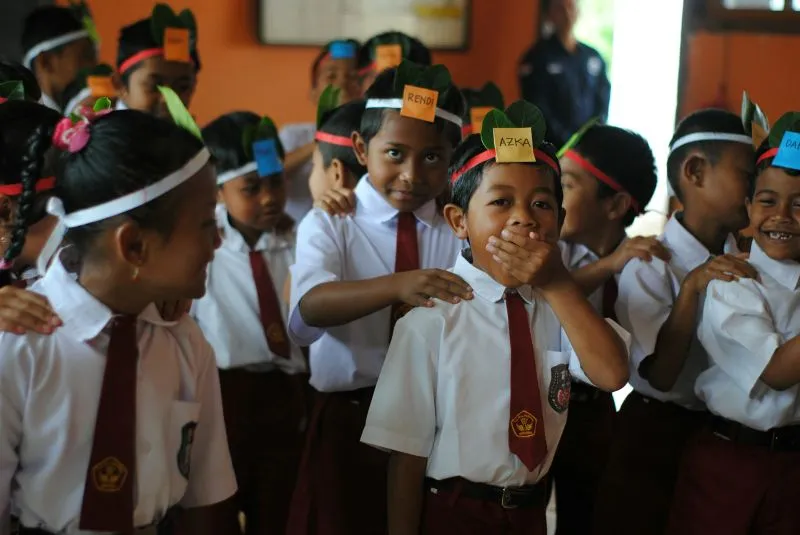
This isn’t a small concern for a handful of families, either – expatriate children made up over 90% of private-school enrollment across the UAE in 2025, and Abu Dhabi’s own student numbers grew by roughly 12.9% in the 2024-2025 academic year alone, according to Mordor Intelligence’s UAE Private K-12 Education Market Report and Market Research Abu Dhabi’s enrollment data. More families than ever are weighing these exact questions right now.
Why It Takes More Than Location And Fees
This is exactly why choosing among Abu Dhabi schools for expats takes more than comparing tuition fees and drive times. A school’s real value shows up in how it teaches, how it supports children who are new to the city, and how welcoming the day-to-day environment actually feels once your child walks through the gate.
Rawafed Private School is one example worth mentioning early, since it reflects what many families end up looking for: an American curriculum school in Khalifa City A that brings together students and teachers from many nationalities under one roof. It’s not the only option in the city, but it’s a useful reference point as we go through what actually matters in an application.
Understand The Curriculum Options Available For Expat Families
Abu Dhabi hosts dozens of private schools, and the curriculum they follow shapes almost everything else – daily timetable, exam style, and even how homework is assigned. Before shortlisting the best schools in Abu Dhabi for expats, it helps to know what’s actually on offer:
- British curriculum – runs through to IGCSEs and A-Levels; common among families planning to study in the UK later.
- American curriculum – structured around US grade levels, often leading into AP courses, SAT prep, and a recognized high school diploma. Rawafed’s own curriculum page breaks down how this looks year by year, from Kindergarten through Grade 12.
- International Baccalaureate (IB) – runs from the Primary Years Programme through to the Diploma; popular with families who relocate often.
- Indian curricula (CBSE/ICSE) – well suited to families planning a return to India or applying to Indian universities.
Compare Curriculum Choices Based On Your Child’s Future Plans
If your child is likely to attend university in a specific country, it usually makes sense to match the curriculum to that destination. A British system feeds naturally into UK universities, while an American diploma with AP subjects lines up well with US college applications. It’s not a hard rule, but it does make the transition smoother later on.
Check How The Curriculum Supports Different Learning Needs
Curriculum on paper is one thing; how it’s delivered day to day is another. Worth asking:
- How are subjects paced for a student joining partway through the year?
- Is there extra language support for children who aren’t yet confident in English?
- Is Arabic taught alongside the main curriculum, so expat children can connect with the local culture?
Evaluate The School’s Accreditation And Academic Standards
Every private school in Abu Dhabi is inspected by the Department of Education and Knowledge (ADEK) under a framework called Irtiqaa, which rates schools from Outstanding down to Very Weak. These ratings cover achievement, teaching quality, leadership, and wellbeing and inclusion. It’s public information and one of the fastest ways to judge a school before booking a tour.
Review School Recognition And Quality Assurance
Look up the school’s most recent ADEK rating and, if it follows an international curriculum, its accreditation body – Cognia is a common one for American curriculum schools in the emirate. A consistent rating across several inspection cycles usually says more than a single strong year.

Explore Teaching Quality And Learning Support
Beyond the headline rating, dig into the detail:
- How experienced is the teaching staff, and what’s the turnover like?
- What’s the average class size?
- How is progress tracked and reported back to parents?
Schools that publish clear, specific inspection feedback are generally more transparent about where they excel and where they’re still improving.
Check Admission Requirements Before Applying
Every school asks for a similar set of documents, but timelines and specific rules can vary, so it pays to check early rather than scrambling close to your target start date. Typical requirements include:
- Academic records – your child’s last two years of school reports, translated and stamped if not already in English or Arabic
- Identity documents – passport copies, visa pages, and an Emirates ID once issued
- Transfer certificate – confirms your child has left the previous school in good standing
- Health records – vaccination certificates and, sometimes, a basic medical fitness check
- Assessment results – for Year 3 and above, expect a placement or entrance test in English, maths, or reasoning; older applicants may need previous standardized scores
Application fees and enrollment deposits are also worth confirming upfront, along with whether the school offers a payment plan – Rawafed’s admissions page lists its own placement-test format and document checklist, and its tuition and payments page sets out how fees are split into installments, which is fairly typical across private schools in the city.
Explore Student Support Services For Expat Children
Academic quality matters, but so does how a school helps a child settle in emotionally. Worth asking about:
- Orientation programs for new students
- Buddy systems that pair newcomers with existing classmates
- Counseling or pastoral care staff on campus
- English as an Additional Language (EAL) support, which can make the difference between a rough first term and a confident one
If your child has any learning support needs, share the relevant reports with the admissions team early — schools with strong inclusion ratings tend to respond well to that transparency, and it helps them plan the right support from day one.
Visit The School Before Making A Final Decision
No brochure or ranking list replaces walking through the actual campus. A few things worth doing during a visit:

- Schedule it during a normal school day rather than an open house, so you see real classes in session, not a staged tour
- Notice how staff interact with students in the hallway
- Ask to see a typical class in your child’s target grade
- Talk to current parents if you can arrange it — often more useful than any official presentation
Why Rawafed Is A Strong Choice For Expat Families In Abu Dhabi
Rawafed Private School, located in Khalifa City A, is built around supporting students from a wide mix of cultural backgrounds. With well over a thousand students and a teaching staff that itself represents multiple nationalities, the school has spent years refining how it welcomes families who are new to Abu Dhabi.
A few things stand out about what Rawafed offers:
- American curriculum, taught from Kindergarten through Grade 12 and accredited by Cognia, with Advanced Placement courses available in the senior years – full details are on the curriculum page
- A supportive, inclusive learning environment, where cultural diversity is treated as a strength rather than something to work around
- A focus on academic excellence alongside personal development, so students build character and confidence, not just exam scores
- Experienced educators with a notably low staff turnover, which means continuity for students year over year
- Leadership and extracurricular opportunities, from clubs and competitions to trips that broaden students’ experience beyond the classroom, covered on the student life page
For a family arriving in Abu Dhabi for the first time, that combination – recognized curriculum, consistent staff, and a community that’s used to welcoming newcomers – takes some of the pressure off an already busy relocation. Families can also start the process online through Rawafed’s registration page. It’s part of why Rawafed keeps coming up when people compare best schools in Abu Dhabi for expats.
Making A Confident School Choice For Your Family
Picking from the many Abu Dhabi schools for expats isn’t a decision to rush. It means looking closely at curriculum fit, checking accreditation and inspection ratings, confirming exactly what documents and deadlines apply to your child, and understanding what support is actually available once your child is enrolled – not just what’s promised in a prospectus.
Facilities and overall school culture round out the picture, and none of it can be judged properly without a visit.
The right school gives your child two things at once: real academic opportunity and a place where they genuinely feel they belong. Starting research early, booking visits before deadlines, and comparing a handful of best schools in Abu Dhabi for expats side by side will save stress later and give your family a calmer path into the new school year.
Frequently Asked Questions
What is the best curriculum for expat children in Abu Dhabi?
There’s no single “best” curriculum – it depends on where your family is likely to be in a few years. British and American curricula are the most common choices among expats, while IB suits families who expect to relocate again.
How much do private schools in Abu Dhabi cost for expats?
Fees vary widely by grade level and curriculum, ranging from around AED 27,000 a year in early kindergarten to well over AED 100,000 for senior IB or A-Level years at premium schools. Always check whether transport, uniforms, and activity fees are included separately.
Can expat children join an Abu Dhabi school in the middle of the academic year?
Yes, most private schools accept mid-year transfers if space is available, though popular schools and grade levels can have waiting lists, so it’s worth applying as early as possible.
Do Abu Dhabi schools support children who don’t speak English fluently?
Many schools offer English as an Additional Language support, particularly in the early primary years, though the level of support varies by school, so it’s worth asking directly during admissions.
At what age do children usually start school in the UAE?
Most schools accept children into Foundation Stage or Kindergarten around age three to four, with formal Grade 1 or Year 1 typically starting around age five to six, depending on the curriculum.