Choosing the right school is one of the most consequential decisions a parent will make – not just for grades, but for the kind of person a child grows into. In Abu Dhabi, where the private education sector has expanded significantly over the past decade, parents have more options than ever. That variety is genuinely useful, but it also means the decision requires real thought, not just a shortlist based on proximity or reputation.
The short answer: the best private schools in Abu Dhabi combine academic rigour, well-rounded development, and strong university preparation – and the right one depends entirely on your child’s needs, learning style, and long-term goals.
With over 200 private schools in Abu Dhabi supervised by the Department of Education and Knowledge (ADEK), the sector is large, regulated, and steadily improving. But “regulated” doesn’t mean “uniform.” Quality and approach vary widely. This guide walks through what actually matters when comparing options, and how Rawafed School supports parents throughout that process.
Why Choosing the Right Private School Matters
The school a child attends shapes far more than academic results – it shapes confidence, social skills, and the relationship with learning itself.
Academic Excellence
Strong outcomes come from qualified teachers, a coherent curriculum, and consistent assessment. A useful benchmark for comparing Abu Dhabi private schools is ADEK’s Irtiqa’a inspection results, which evaluate schools across six standards, including student achievement, teaching quality, and leadership.
A 2025 cross-emirate study published in the All Research Journal found that over 71% of ADEK-inspected Abu Dhabi schools achieved Good or higher, with roughly 6% rated Outstanding. Schools rated Acceptable or below face enrolment restrictions, giving parents a practical signal about quality gaps.
Accreditation matters alongside inspection ratings. Schools holding recognised accreditations – such as Cognia for American curriculum institutions – must demonstrate continuous improvement.
Holistic Development
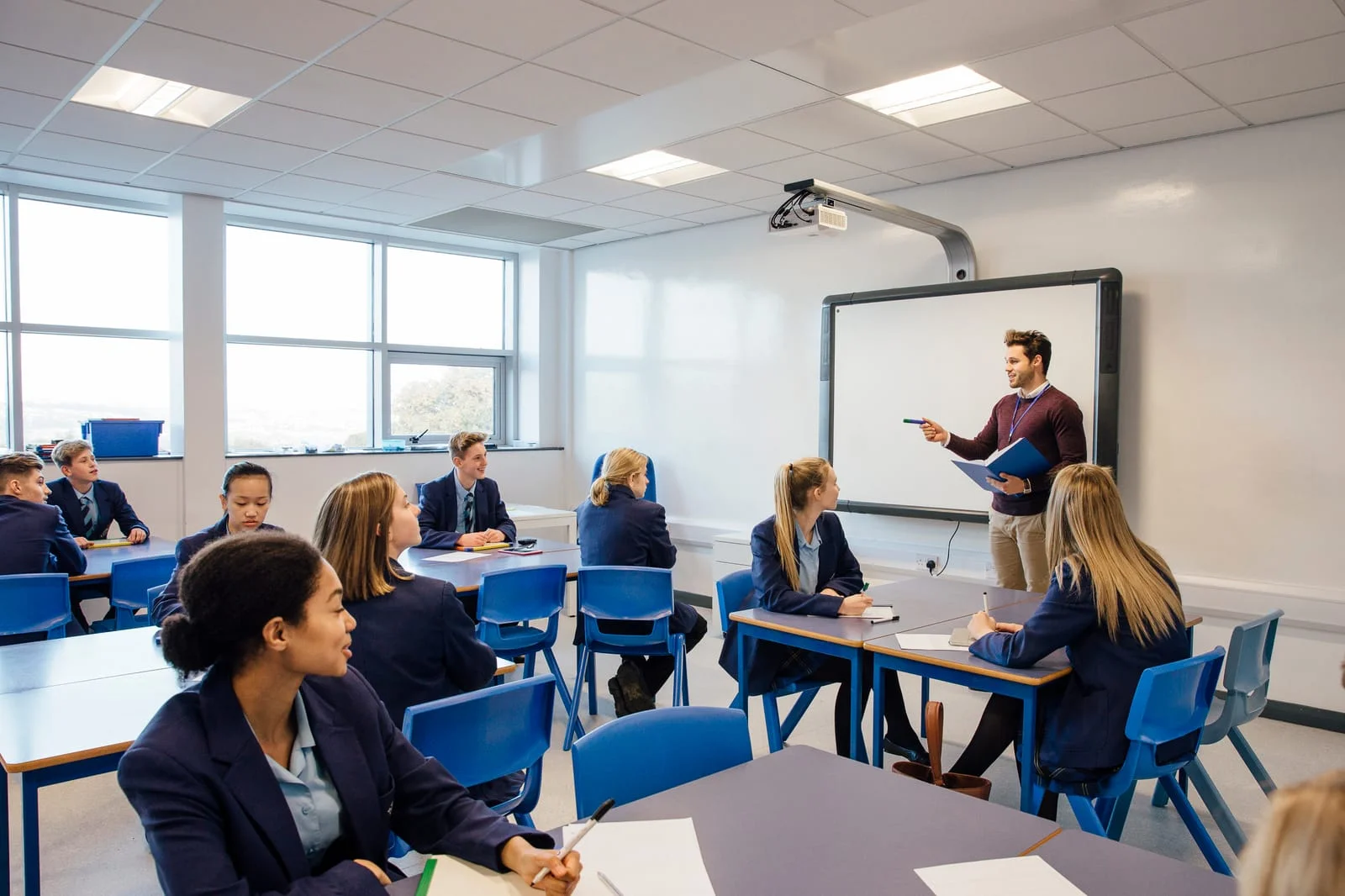
Top private schools Abu Dhabi understand that academic scores are only one part of the picture. Schools that consistently stand out invest in:
- Extracurricular programmes – sports, arts, community service, and leadership activities
- Social-emotional learning – managing stress, resolving conflict, and working collaboratively
- Bilingual education – English and Arabic fluency opens doors both locally and internationally
- Physical education and wellness – proper sports facilities make a measurable difference in engagement
Schools that incorporate fun, interactive educational activities – hands-on experiments, group projects, and gamification – see real gains in retention and well-being. When children enjoy learning, it directly affects academic performance over time.
University and Career Readiness
The most effective private schools in Abu Dhabi don’t treat Grade 12 as an endpoint. They build toward it with AP programmes, SAT preparation, university counselling, and structured guidance from Grade 10 at the latest.
Looking further ahead also matters. As Rawafed’s analysis of the future of education in Abu Dhabi notes, many roles students will eventually hold don’t yet exist – making adaptability, digital literacy, and lifelong learning habits more valuable than any single qualification.
Overview of Private School Options in Abu Dhabi
Abu Dhabi’s private school sector is genuinely diverse. Understanding the main categories makes comparison easier.
Abu Dhabi International Private Schools
Abu Dhabi international private school options span British, American, IB, French, and Indian (CBSE/ICSE) curricula, among others. British and IB programmes emphasise analytical writing and independent inquiry. American schools offer a broader subject range in earlier grades, with AP courses adding university-level rigour in senior years.
Curriculum continuity matters, especially for expat families. A child moving from an American school abroad to an Abu Dhabi international private school following the same system will have far fewer learning gaps than one who switches mid-education.
It’s also worth noting how much curricula are shifting. Abu Dhabi schools – particularly those with international affiliations – are integrating STEM and STEAM, personalised learning pathways, and social-emotional learning into their programmes. Rawafed’s look at curriculum innovations across Abu Dhabi schools covers how these changes reshape daily student experience – from competency-based progression to adaptive digital tools.
Local Private Schools in Abu Dhabi
Local Abu Dhabi private schools typically follow the UAE Ministry of Education curriculum or an Arabic-medium variation of international programmes, with stronger integration of Islamic Studies, Arabic, and UAE social studies. Many have adopted bilingual models in recent years – teaching core subjects in English while maintaining deep Arabic instruction.
This hybrid approach appeals to Emirati families who want global academic credibility alongside cultural and linguistic continuity.
Comparison: International vs Local Private Schools
| Feature | International Private Schools | Local Private Schools |
|---|---|---|
| Primary Language | English (with Arabic) | Arabic and/or bilingual |
| Curriculum | British, American, IB, CBSE | UAE MOE, Arabic-medium, bilingual |
| University Pathways | UK, US, global universities | UAE universities, regional options |
| Cultural Focus | International/multicultural | UAE identity, Islamic values |
| Fees (Avg. Range) | AED 25,000–80,000+ | AED 15,000–45,000 |
| ADEK Inspection | Required for all | Required for all |
Neither category is categorically better. The right fit depends on where the family plans to be long-term and what post-secondary pathway the child is heading toward.

Planning Your Child’s Academic Journey at Rawafed School
For families considering American curriculum options, Rawafed School in Khalifa City A runs from Kindergarten through Grade 12, holds Cognia accreditation, and has maintained a consistent ADEK Good rating across four consecutive inspection cycles.
Admissions Process
Rawafed keeps the admissions process clear and accessible. All applicants from Grade 1 sit a placement test in English, Mathematics, and Arabic – typically completed within two hours, with no preparation required. The test determines the right grade placement.
Required documents include passport copies, Emirates ID, recent school reports, immunisation records, and a birth certificate. For relocating families, provisional offers are common, with full enrolment confirmed once residency paperwork is ready. Current intake details are on the registration page.
Tailored Academic Pathways
The curriculum at Rawafed moves through three structured phases:
- KG1 – Grade 4: Broad foundation in English, Arabic, Mathematics, Islamic Studies, Science, Computer Studies, PE, Music, and Art – with French and Social Studies added in Grade 4.
- Grades 5 – 10: Specialist subject teachers deliver greater depth across all subjects.
- Grades 11 – 12: University-preparatory pathway with AP courses in Biology, Chemistry, Physics, and Mathematics, plus SAT I, SAT II, and TOEFL preparation.
The bilingual English-Arabic model is a standout feature – students graduate with genuine proficiency in both languages, valuable for UAE careers and for families who want Arabic to remain central to their child’s identity.
Student Support Services
Rawafed’s campus includes state-of-the-art laboratories, an indoor multi-purpose hall, and extensive outdoor sports grounds. A comprehensive bus service runs across Abu Dhabi, with a dedicated transportation assistant on every route. Staff support covers academic assistance and social-emotional guidance, and regular parent-teacher communication keeps families actively involved – a factor consistently linked to stronger student outcomes.
Preparing for University and Beyond
The AP programme at Rawafed provides genuine university credit potential recognised by US and Canadian institutions. SAT and TOEFL preparation is built into the timetable for Grades 11–12 rather than outsourced.
For students targeting UAE universities, the American curriculum maps well onto local entry requirements, particularly in STEM and business. Starting the university conversation by Grade 9 ensures subject choices in the final years are made with a clear destination in mind.
How Parents Can Take the Next Step
Assessing schools on paper is a good start, but nothing replaces a visit. The atmosphere, the students’ confidence, and how staff engage parents during open days tell you things inspection reports can’t. Ask specifically about learning support, pastoral care, and university guidance.
Use ADEK Irtiqa’a ratings as a baseline – not the final word. A Good-rated school might be the perfect fit; a Very Good rating doesn’t guarantee it suits every child. For families looking at American curriculum schools, Rawafed’s admissions team is the right first call.
Contact Rawafed School today to start planning your child’s academic future. Whether enrolling for the first time or transferring mid-cycle, the admissions team can walk you through placement and help match the curriculum to your family’s goals. Visit rawafedschool.com or get in touch to arrange a school tour.
Frequently Asked Questions
What documents are needed to enrol in a private school in Abu Dhabi?
Most private schools in Abu Dhabi require an application form, passport and Emirates ID copies, recent school reports (last two years), immunisation records, a birth certificate, and passport photos. Some also request a teacher recommendation letter.
How do I know which curriculum is right for my child?
Start with your family’s long-term plans. If returning home soon, match that country’s curriculum to ease the transition. For families staying in the UAE or targeting international universities, British, American, or IB programmes are solid choices. Speaking directly with admissions teams about university pathways helps clarify the decision.
Are there waitlists for popular schools in Abu Dhabi?
Yes – especially at key entry points like KG1, Year 1, and Year 7 in sought-after Abu Dhabi private schools. Applying early and submitting all documents promptly improves your chances. Many families apply to two or three schools at once.
What is the difference between ADEK-rated Good and Outstanding schools?
ADEK uses a six-point scale: Outstanding, Very Good, Good, Acceptable, Weak, and Very Weak – with Good as the minimum standard. Outstanding schools demonstrate exceptional outcomes across all six assessment standards. Most private Abu Dhabi private schools sit in the Good to Very Good range.
Can non-Arabic-speaking children manage in Abu Dhabi private schools?
Yes. Most Abu Dhabi international private school options teach core subjects in English, with Arabic offered as a subject differentiated for native and non-native speakers. Non-Arabic speakers are not disadvantaged academically. Schools like Rawafed provide structured Arabic development as part of their bilingual model – something many families come to value over time.