Schools are moving away from the “sit, listen, memorize, repeat” model – and it’s not hard to see why. Inquiry-based education puts students at the center of the learning process, asking them to question, explore, and build understanding through guided discovery rather than passive instruction. This shift is visible across schools worldwide, including forward-thinking institutions in the UAE like Rawafed Private School, where learning environments are being deliberately redesigned around curiosity, critical thinking, and real-world problem-solving.
The old model was never really built for a world that demands adaptability. When the primary goal of schooling was passing down a fixed body of knowledge, rote learning made some sense. Today, students need to know how to ask sharp questions, evaluate information, work through uncertainty, and think independently – skills that no amount of textbook drilling reliably produces, but that inquiry-based learning in education does.
What Is Inquiry-Based Learning in Education?
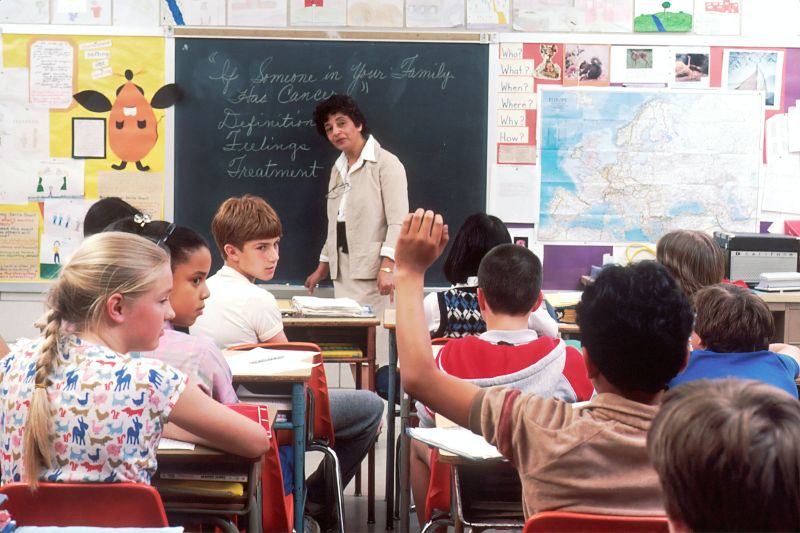
At its heart, inquiry-based education is built on the idea that people learn best when they are genuinely curious about what they’re exploring. Instead of receiving pre-sorted information top-down, students start with a question or challenge, then gather evidence, test ideas, and form their own conclusions. The teacher’s job shifts from delivering answers to designing the right conditions for discovery.
This is not an unstructured free-for-all. Good inquiry classrooms are carefully scaffolded – students get support, feedback, and direction at the right moments, just not pre-packaged conclusions.
Key Principles Behind Inquiry-Based Education
Regardless of grade level or subject, inquiry-based education is guided by several consistent principles:
- Student ownership – Students generate and pursue their own questions, which increases both engagement and retention
- Active investigation – Learning happens through doing: experiments, research, discussion, and hands-on projects
- Collaboration – Students work together to share findings, challenge each other’s reasoning, and build collective understanding
- Reflection – Students regularly examine what they’ve learned, how they learned it, and what still needs exploring
- Teacher as facilitator – The instructor guides, prompts, and scaffolds rather than simply transmitting information
How Inquiry-Based Education Differs from Traditional Teaching
The contrast between the two approaches plays out in tangible, day-to-day differences:
|
Traditional Teaching |
Inquiry-Based Education |
|
The teacher presents information |
Students generate questions |
|
Students memorize content |
Students investigate and analyze |
|
Single correct answer expected |
Multiple paths to understanding |
|
Assessment through recall tests |
Assessment through process and application |
|
Passive learning |
Active, self-directed exploration |
The shift isn’t about removing structure – it’s about changing where the intellectual work happens. In inquiry classrooms, students do that work.
Why Schools Are Moving Toward Inquiry-Based Learning
Schools aren’t adopting inquiry-based methods out of trend-chasing. Three consistent pressures are driving the shift.
Preparing Students for Real-World Skills
The skills most valued in academic and professional settings today – critical thinking, problem-solving, adaptability, clear communication – don’t develop reliably through passive instruction. Schools that have recognized this are making deliberate moves toward teaching that builds those capacities through practice, not just theory.
A 2025 systematic review and meta-analysis published in the Eurasia Journal of Mathematics, Science and Technology Education analyzed 36 studies and found IBL produced a substantial mean effect size of 1.27 on students’ critical thinking skills – a significant finding that reinforces why so many institutions are rethinking their approach.
Demand for Higher Student Engagement
Disengagement is one of the most persistent challenges in modern classrooms. When students feel like passive recipients of pre-sorted information, motivation drops. Inquiry flips that dynamic – students investigating something they’re genuinely curious about tend to stay focused longer, ask better follow-up questions, and retain what they discover far more reliably.
Beyond test scores, students who regularly engage in inquiry-based learning in education tend to develop stronger metacognitive habits. They become more aware of how they think, where their understanding breaks down, and what they need to do to fill in the gaps.
Personalised Learning Needs
No two students learn at the same pace or in the same way. Inquiry accommodates that reality better than one-size-fits-all lesson delivery. When students can pursue questions that genuinely interest them – within a structured framework – they naturally engage at a level suited to their ability and curiosity.
This is particularly valuable in diverse classrooms where students arrive with very different starting points. Inquiry doesn’t ask everyone to arrive at the same answer at the same time. It asks everyone to engage meaningfully with the process.
How Inquiry-Based Learning Works in Real Classrooms
The Learning Cycle: Question → Research → Explore → Conclude → Reflect
A typical inquiry-based session follows a recognizable pattern, whether it unfolds across a single lesson or a multi-week project. Here’s how it looks step by step:
- Question – The teacher or student poses an open-ended problem or challenge. The question should be genuinely answerable through investigation, not simple recall.
- Research – Students gather relevant information from multiple sources: texts, experiments, peer discussions, or direct observation.
- Explore – Students test ideas, run experiments, or examine data to build their own understanding of the problem.
- Conclude – Students draw evidence-based conclusions and articulate what they’ve found in a way that can be shared and critiqued.
- Reflect – Students examine their own thinking: What surprised them? What would they do differently? What new questions emerged?
What makes this cycle effective is that it mirrors the process experts in every field actually use when solving real problems. Students aren’t just preparing for exams – they’re developing the habits of mind that carry into any serious pursuit.
A 2025 systematic review in the Journal of Education, Learning, and Management, drawing on 35 empirical studies, confirmed that IBL strengthens deep learning constructs – specifically critical thinking, metacognitive skills, and scientific reasoning – most effectively when students have structured autonomy and a skilled teacher to facilitate.
How Schools Like Rawafed Implement Inquiry-Based Education
Classroom Structure and the Physical Learning Environment
Implementing inquiry-based education well requires more than a new lesson plan – it requires rethinking how classrooms are physically and socially organized. Desks in rows facing a whiteboard signal a lecture model. Inquiry classrooms tend to look different:
- Flexible seating that supports both group work and independent investigation
- Accessible materials for hands-on exploration and experimentation
- Wall space that reflects ongoing student thinking rather than completed, teacher-produced content
- Designated areas for research, collaboration, and quiet reflection
At Rawafed Private School, the American curriculum framework is applied across KG through Grade 12 in a way that gives students structured exposure to exactly this kind of active learning. The school’s approach is built on the understanding that strong foundational skills – reading, reasoning, research – develop best when students are genuinely engaged in using them, not simply practicing them in isolation.
Teacher Training and Ongoing Development
Moving from traditional instruction to inquiry-based teaching is a significant professional shift. It requires genuine changes in how teachers:
- Plan lessons that start with questions rather than conclusions
- Respond to unexpected student directions without losing learning objectives
- Assess understanding through process and reasoning, not just final answers
- Create productive struggle without letting students flounder unproductively
This is why teacher development is not a one-time event in serious inquiry-based schools. Ongoing professional development keeps educators aligned on best practice, sharpens their facilitation skills, and creates space to troubleshoot what’s not working.
Schools that invest consistently in this kind of teacher development tend to see more consistent outcomes across classrooms. The approach stops depending on any single teacher’s personality and becomes part of how the institution functions as a whole.

The Real Shift Happening in Schools Today
Inquiry-based education is not a passing trend. It’s a fundamental rethink of what school is actually for – and schools that have made that shift are seeing it pay off in the ways that matter most: students who engage deeply, think independently, and carry those habits well beyond the classroom.
Schools like Rawafed Private School in Abu Dhabi are getting this right – weaving student-centered learning into curriculum design, classroom structure, and teacher development. The result is students who know how to think, not just what to think. And in a world that rewards adaptability and independent reasoning, that distinction makes all the difference.
Interested in seeing how Rawafed’s learning environment works in practice? Visit the admissions page to learn more about enrollment, or explore the curriculum overview to understand how student-centered learning shapes every stage of education here.
Frequently Asked Questions
What is the difference between inquiry-based learning and project-based learning?
Inquiry-based learning centers on student-driven questioning and investigation. Project-based learning focuses on producing a finished deliverable. The two overlap, but inquiry prioritizes the thinking process over the output.
Is inquiry-based education suitable for younger students?
Yes. Children are naturally inclined to ask questions, making inquiry an intuitive fit. The level of scaffolding adjusts by age, but the core approach works from early childhood through secondary school.
How are students assessed in an inquiry-based classroom?
Assessment focuses on process – how students formulate questions, gather evidence, reason through problems, and reflect on their learning – not just whether they arrived at the right answer.
Does inquiry-based learning work across all subjects?
It does. History students investigate primary sources; math students explore problem paths without being shown the solution first; literature students form and defend interpretations. The method adapts to the discipline.
How does inquiry-based learning prepare students for higher education and careers?
It builds the habits that universities and workplaces consistently require: focused questioning, critical evaluation of evidence, comfort with ambiguity, and clear communication of findings.