The OECD’s Social and Emotional Skills for Better Lives report, Q2 2024, found that students’ social and emotional skills tend to decline between the ages of 10 and 15, with optimism, persistence, and trust among the biggest drops. So the child who once raised a hand for everything may start saying, “I’m not good at this.”
Confidence in children is a child’s belief that they can handle tasks, challenges, and social situations, even when those feel hard at first, like a student who isn’t sure of an answer but tries anyway. Building confidence in children isn’t about constant praise or removing every challenge. It grows through small, repeated experiences at home and at school, and the ten habits below show how to build them into everyday life.
Why Small Daily Habits Matter for Building Confidence in Children
Small daily habits matter because children judge their abilities based on what happens to them again and again, not on what adults tell them once. A child who packs their own bag every morning gathers quiet proof that they are capable. One enthusiastic “You can do anything!” before a school play can’t compete with that.
The same OECD research links stronger social and emotional skills, such as persistence and self-control, to better results in reading, mathematics, and the arts. Confidence is not a bonus skill that sits beside learning; it is part of what makes learning possible.
Consistency is what makes the difference. Occasional encouragement feels nice, but daily routines built around independence, problem-solving, communication, and responsibility teach children something deeper: “I can figure this out.” Over months, that becomes part of how they see themselves.
10 Daily Habits That Can Help Build a Child’s Confidence
If you’re wondering how to build confidence in children without turning family life into a project, start with habits that take just a few minutes a day. Here’s a quick overview before looking at each one:
| Daily Habit | Main Skill It Builds | Time Needed |
|---|---|---|
| Doing small tasks alone | Independence | 5-10 minutes |
| Sharing opinions | Self-expression | A few minutes at dinner |
| Hearing effort-based praise | Persistence | Seconds |
| Facing one manageable challenge | Courage | Varies |
| Learning from mistakes | Resilience | A short conversation |
| Solving problems first | Independent thinking | A pause before helping |
| One positive social interaction | Social confidence | Moments |
| Talking about school | Reflection and communication | 10 minutes |
| Noticing personal progress | Self-awareness | A quick comment |
| Ending the day with pride | Balanced self-view | 2 minutes at bedtime |
1. Let Children Do Small Tasks for Themselves
Age-appropriate responsibilities show children that they are capable. Younger children can pack their school bag, put away toys, or pour their own drink, while older ones can organise their desk or prepare a simple snack.
The hard part is not stepping in when things take longer. A bag packed slowly, but independently, teaches more than one packed perfectly by a parent. Families can learn more about supporting independent learning at home, where the same principle applies to homework and study.

2. Ask for Their Opinion Every Day
Asking for a child’s opinion tells them their ideas matter. Invite their thoughts on everyday choices: what to cook on Friday, how a story should end, or where to go at the weekend.
Then listen properly. Ask follow-up questions like “Why do you think that?” and treat the answer seriously, even if you don’t agree. Children who practise sharing ideas at home find it much easier to speak up in class.
3. Praise Effort More Than Results
Effort-based praise teaches children that improvement is within their control. Notice persistence, preparation, concentration, and clever problem-solving, and say specifically what you saw: “You kept going on that maths problem even when it got tricky.”
Automatic phrases like “Good job!” quickly lose meaning. And when confidence depends only on grades, awards, or wins, it collapses the moment results dip. Praising the process keeps it steady.
- Note: More praise isn’t always better. Children quickly notice when praise is exaggerated, and constant “You’re amazing!” can make them afraid to try anything where they might not live up to it. Honest, specific praise carries far more weight.
4. Give Them One Manageable Challenge
A small, realistic challenge each day helps children stretch their comfort zone without feeling overwhelmed. It might mean reading a slightly harder book, trying a new activity, or answering one question in class.
For children asking how to be confident in school, this is often the best starting point: one small brave action, repeated. The right challenge feels slightly uncomfortable but achievable. If it leads to tears or frustration every time, scale it back.
5. Treat Mistakes as Part of Learning
When mistakes are treated as information rather than failure, children stop being afraid to try. Talk about what went wrong without criticising the child: the answer was wrong, not the person.
Ask, “What could you try differently next time?” Adults can model this too. When you burn dinner or forget an appointment, respond calmly and say what you’ll do next time. Children learn more from watching that than from any lecture.
6. Give Children Time to Solve Problems
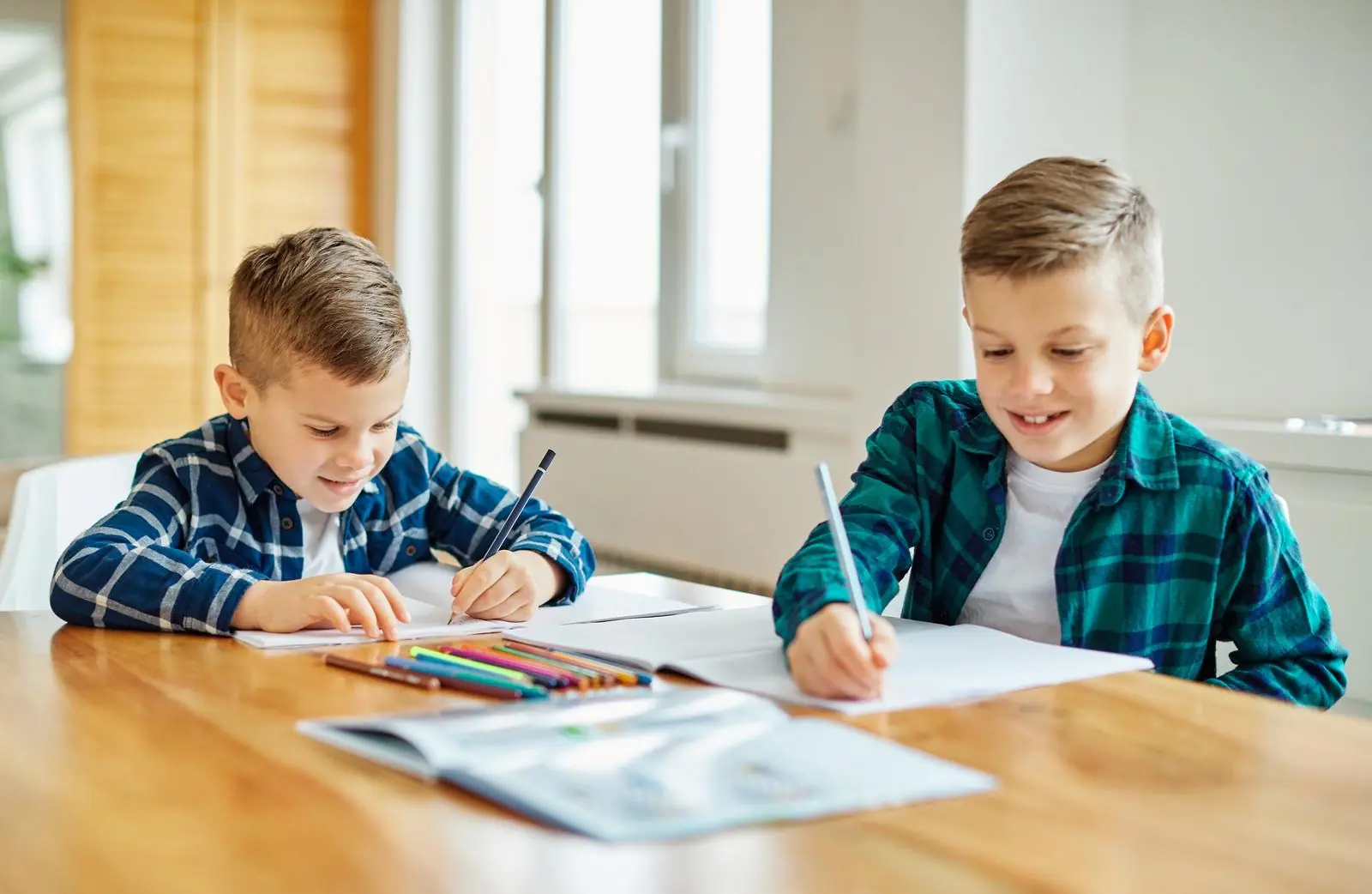
Pausing before giving answers lets children discover that they can think things through. When your child is stuck on homework or arguing with a sibling, wait a moment before stepping in.
If they need help, guide rather than rescue. Questions like “What have you tried so far?” or “What else could work?” keep the thinking in their hands while still offering support.
- Tip: Try a silent ten-second count before you help. It feels long, but in that pause, many children find the next step on their own, and that small win does more for their confidence than your answer would.
7. Encourage One Positive Social Interaction
Small, positive social moments build confidence with other people over time. Encourage one simple action each day, such as:
- Greeting a classmate or teacher by name
- Asking to join a game or group
- Helping a friend with something they find difficult
- Starting a short conversation with someone new
Shy children need gradual steps, not pressure. Each good experience makes the next one easier, and group activities built on strong student teamwork give children natural chances to practise.
8. Have a Short Daily Conversation About School
A focused daily chat about school helps children process their day and feel heard. “How was school?” usually gets “Fine.” Specific questions work better:
- What was the most interesting thing you learned today?
- What felt hard, and how did you handle it?
- Who did you spend break time with?
- What are you looking forward to tomorrow?
Listen before offering advice. Sometimes children just need to tell the story, and jumping straight to solutions can make them stop sharing.
9. Help Them Notice Their Own Progress
Comparing a child with their earlier self, rather than with other children, builds lasting confidence. Point out skills that have become easier: “Remember when reading this kind of book took you ages?”
This approach mirrors Rawafed’s school policies, which describe a culture where every student progresses by building on their previous performance rather than being compared with others. Over time, encourage children to spot their improvement themselves.
10. End the Day With Something They Are Proud Of
A short moment of reflection at bedtime helps children build a balanced view of their strengths. Ask them to name one thing from the day they feel good about, such as:
- Something they did well or learned
- Something they tried for the first time
- A kind thing they did for someone else
- A moment they kept going when it was hard
Include kindness, persistence, responsibility, and effort, not only achievements. That way, even a difficult day ends with evidence that they handled something well.
- Try this tonight: Ask, “What’s one thing you did today that you’re proud of?” Then share your own answer too. When parents take part, children see reflection as a normal family habit rather than a test.
Which Everyday Behaviours Can Undermine a Child’s Confidence?
Everyday habits can quietly undermine confidence, even when parents mean well. Building confidence in children works much better when adults notice these patterns and swap them for more helpful responses:
| Common Behaviour | Why It Hurts Confidence | Try This Instead |
|---|---|---|
| Comparing with siblings or classmates | Makes worth feel conditional on ranking | Compare with their own past progress |
| Correcting every minor mistake | Teaches that nothing is ever good enough | Focus on one or two key points |
| Doing tasks for them because it’s faster | Sends the message they aren’t capable | Allow extra time in the routine |
| Using labels like “shy,” “lazy,” or “the smart one” | Children start living up to the label | Describe behaviour, not identity |
| Praising only top achievement | Confidence disappears when results drop | Recognise effort and improvement |
| Expecting instant confidence in new situations | Adds pressure to already anxious moments | Allow time to warm up |
None of these makes someone a bad parent. They’re common, and most families use a few of them without noticing. Swapping even one or two can make a visible difference within weeks.
What Makes Building Confidence in Children Last?
Lasting confidence comes from repetition: children believe in their abilities when they experience success, recovery, and progress again and again in ordinary daily life. Independence, effort-based praise, problem-solving, open communication, and reflection all feed into that belief.
You don’t need all ten habits at once. Pick two or three that fit your family’s routine, keep them going for a month, and then add another. Consistent small steps will do far more for building confidence in children than any single big gesture.
Nurture Your Child’s Confidence at Rawafed School
Lasting confidence grows when children are encouraged to try, reflect, and celebrate their own progress every day. At Rawafed School, our educators create a supportive environment where every student is guided to build independence, resilience, and self-belief at their own pace.
Contact us today to learn how we help students grow into confident, capable learners.
Frequently Asked Questions About Building Confidence in Children
What is the difference between healthy confidence and overconfidence in my child?
Healthy confidence means a child believes they can learn and improve while still accepting feedback and mistakes. Overconfidence often shows up as refusing help, dismissing others, or avoiding effort because they assume they’ll succeed anyway.
Why has my confident child suddenly become insecure at school?
Changes such as a new class, a harder curriculum, friendship problems, or a move to a new school stage can shake a child’s confidence. Talk calmly with your child and their teacher to find the trigger, especially during the transition to middle school.
How should I respond when my child keeps saying “I can’t do it”?
Acknowledge the feeling, then add one word: “You can’t do it yet.” Break the task into a smaller first step and remind them of something they once found hard but can do now.
Can my child be confident academically but lack social confidence?
Yes. Confidence often varies across different areas, so a child can feel sure of themselves in maths but nervous in groups. Small, regular social experiences help build the missing side gradually.
How can teachers support my child who is confident at home but quiet in class?
Teachers can offer lower-pressure ways to participate, such as sharing with a partner first or answering in writing. Sharing what you see at home helps teachers understand your child’s strengths and plan small steps toward speaking up.