Choosing a school is one of the most consequential decisions a parent makes – and in Abu Dhabi, the options are genuinely vast. With curricula ranging from American and British to IB and UAE national, navigating the landscape of primary schools in Abu Dhabi can feel overwhelming. This guide is designed to help parents cut through the noise and make a confident, well-informed choice.
The Abu Dhabi Education Landscape
Abu Dhabi’s private schools are regulated by the Department of Education and Knowledge (ADEK), which licenses institutions, inspects them every 18 to 24 months through its Irtiqaʼa program, and publishes ratings parents can use to benchmark quality. A school’s ADEK rating – from Outstanding to Weak – reflects performance across five standards: student achievement, personal and social development, teaching quality, curriculum design, and leadership.
That regulatory structure matters more than many parents initially realize. In a market where marketing materials can say almost anything, ADEK ratings are one of the few objective, third-party signals available.
The choice of primary school is especially consequential because it shapes not just what a child learns, but also their habits, confidence, and relationship with structure. Getting it right early is far easier than course-correcting later.

Understanding Primary Education in Abu Dhabi
Private Primary Schools in Abu Dhabi
Private primary schools in Abu Dhabi are the default choice for most expatriate families. They operate under ADEK oversight with clear requirements for curriculum delivery, teacher qualifications, and student welfare. Fees vary considerably across the sector, so there are quality options at different price points – but always factor in registration fees, uniforms, transport, and activity costs alongside the quoted tuition.
What makes private schools particularly appealing is accountability. ADEK ratings are publicly available, giving parents a concrete benchmark beyond brochures and open-day impressions.
International Primary Schools in Abu Dhabi
International primary schools in Abu Dhabi follow globally recognized frameworks – most commonly the British National Curriculum, the American Common Core, or the IB Primary Years Program (PYP). They attract multicultural student bodies, which matters for families who value cross-cultural exposure from an early age.
The IB PYP takes an inquiry-based approach that differs fundamentally from rote-learning models. Children are encouraged to investigate questions, connect across subjects, and develop independent thinking. It suits some learners deeply – and doesn’t suit others at all. Knowing your child’s learning style before choosing a framework saves considerable frustration later.
Public vs. Private Schools
Public schools in Abu Dhabi are Arabic-medium and primarily serve Emirati citizens. For most expatriate families, private or international schools are the practical route. The public sector has invested significantly in facilities and teacher development in recent years, but curriculum access remains limited for non-Arabic speakers.
What Sets the Best Primary Schools in Abu Dhabi Apart
Facilities and Learning Environment
Top schools advertise “state-of-the-art facilities” – but the more revealing question is how those facilities are actually used. Are science labs integrated into regular teaching or reserved for special occasions? Is the library a working hub or a display space?
When visiting, pay attention to:
- Classroom layout – does it allow for group work and flexible learning?
- Outdoor and play areas – critical for younger primary children whose physical development is tied to cognitive growth
- Technology integration – embedded in daily instruction, not used as a novelty
Resource availability – are classrooms well-equipped or visibly stretched?
Extracurricular Activities
A strong extracurricular program is part of a complete education, not an optional extra. Sport, music, drama, robotics, and debate build skills that classroom subjects alone cannot – resilience, teamwork, and leadership under pressure.
For primary-age children, extracurriculars also serve a vital social function: they create communities within the school and often surface strengths that academic settings miss entirely. When comparing schools, ask how many students actually participate in activities, not just how many clubs appear on the website.
How to Choose the Right Primary School
|
Factor |
What to Look For |
|
Curriculum |
Alignment with your child’s learning style and future pathway |
|
ADEK Rating |
Good, Very Good, or Outstanding |
|
Class Size |
Smaller classes allow more individual attention |
|
Language of Instruction |
English-medium, bilingual, or other |
|
Total Fees |
Tuition plus registration, uniforms, transport, activities |
|
Location |
Commute time relative to home and workplace |
|
School Culture |
Values and ethos that match your family’s |
No single factor should dominate. An Outstanding school 45 minutes away may be less suitable than a Very Good school nearby, depending on the child and the family’s daily rhythm.

Questions Parents Should Ask
Come prepared for school visits. The willingness to give honest answers is itself revealing.
- How does the school communicate with parents about academic progress and well-being?
- What is the student-to-teacher ratio in primary classrooms?
- How does the school support children who are ahead or need extra help?
- What is the teaching staff turnover rate?
- How is discipline handled?
Once enrolled, parental involvement makes a real difference – particularly in the early primary years. Understanding what the school is teaching, and reinforcing it at home, is one of the most effective things a parent can do. Our blog covers how to support your child’s school curriculum with practical strategies that work alongside any program.
Admission Process for Primary Schools in Abu Dhabi
Most schools open admissions for the following academic year between January and March. Popular schools fill quickly, so starting early matters. The general process involves:
- Online application via the school’s portal
- Documents – passport copies, Emirates ID, previous school reports, immunization records
- Placement assessment – common for children entering Year 2 and above
- Family or child interview – standard at many international schools
Registration fee to secure the place once accepted
Common Challenges and Tips for the Right Decision
Even well-prepared parents encounter friction. The most common issues:
- Waitlists – top-rated schools fill fast; apply to several simultaneously
- Curriculum confusion – marketing language blurs real differences between American, British, and IB systems; research each framework directly
- Hidden costs – quoted tuition rarely covers everything
- SEND provision – inclusive education is mandated by ADEK, but the quality of support varies widely; ask specifically about this if relevant
The broader goal is not to find the highest-ranked school in the abstract – it is to find the right fit for this child. ADEK’s inspection reports are publicly available and worth reading before shortlisting. And if your child tends to find new environments stressful, it’s worth reading up on how to help children manage school stress before the transition begins – the strategies make a tangible difference.
Visit schools in person, speak to current parents, and give equal weight to your child’s personality and your family’s logistics. The school provides the environment; families shape the attitude toward learning.
The Right Fit, Not Just the Right Ranking
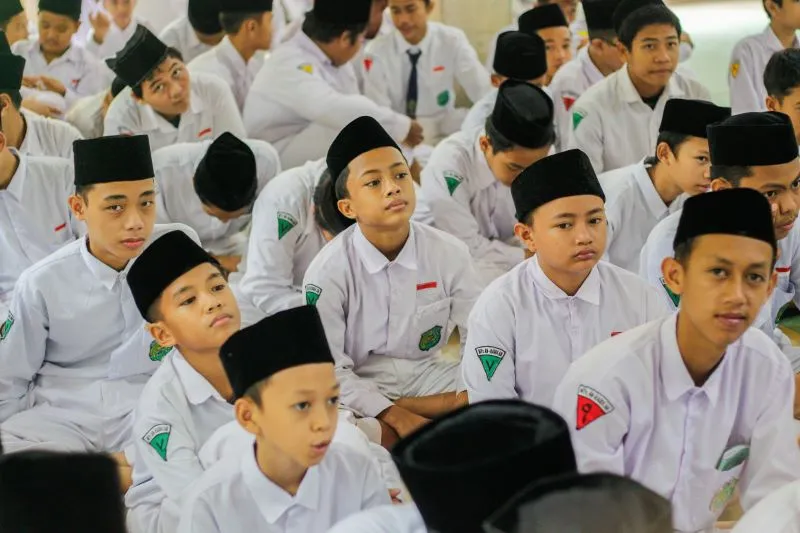
Rankings describe averages – children are not averages. The right primary school is the one where a specific child will feel challenged, supported, and genuinely seen.
Rawafed Private School offers a student-centered American curriculum education in Abu Dhabi from kindergarten through Grade 12, with Cognia accreditation and a diverse, multinational community built on values of integrity, respect, and responsibility.
Frequently Asked Questions
-
At what age do children start primary school in Abu Dhabi?
Children typically start primary school between the ages of 4 and 5, beginning with kindergarten (KG1/KG2) and continuing through Grade 5 or 6. Primary education usually covers ages 4 to 11 years in Abu Dhabi.
- What types of primary schools are available in Abu Dhabi?
There are two main types: public and private schools. Public schools follow the UAE national curriculum and are mainly attended by Emirati students, while private schools offer international curricula such as British, American, and IB.
- Are primary schools in Abu Dhabi free?
Public primary schools are free for Emirati citizens, but expatriates usually need to pay tuition fees and meet certain admission requirements. Private schools charge fees that vary depending on curriculum and reputation.
- What curriculum is taught in primary schools in Abu Dhabi?
Curricula vary widely. Public schools teach the UAE national curriculum (in Arabic), while private schools may follow British, American, IB, or other international systems, giving parents more flexibility in choosing education styles.
- How do parents choose the best primary school in Abu Dhabi?
Parents usually consider factors like curriculum, school ratings (ADEK inspections), location, fees, and extracurricular activities. Many schools are evaluated annually to ensure quality standards are met