Education has shifted from students sitting quietly in rows listening to lectures toward more interactive, student-centered approaches. Collaborative learning has become a cornerstone of modern teaching methods, transforming classrooms into dynamic spaces where students learn from and with each other. This approach recognizes that knowledge isn’t just transmitted from teacher to student—it’s constructed through interaction, discussion, and shared problem-solving.
What is collaborative learning exactly? At its core, it’s an educational approach where students work together in small groups toward common learning goals. Rather than competing against classmates, students contribute their individual strengths to help the entire group succeed. This method reflects how work actually happens in professional settings, where teams collaborate to solve complex problems and create innovative solutions.
Advantages of Collaborative Learning
Enhanced Critical Thinking and Problem-Solving
When students work together on challenging tasks, they must articulate their thinking, defend their reasoning, and consider alternative viewpoints. This process strengthens critical thinking skills in ways that individual work cannot match. Students learn to analyze problems from multiple angles and develop more sophisticated solutions.
The advantages of it become particularly clear when groups tackle complex problems requiring diverse skills and knowledge. One student might excel at organizing information, another at identifying patterns, and a third at creative thinking. Together, they achieve an understanding that would be difficult for any individual to reach alone.
Improved Communication Skills
Collaborative learning requires students to express ideas clearly, listen actively to others, and negotiate different viewpoints. These communication skills develop through practice. Students learn to ask clarifying questions, provide constructive feedback, and explain concepts in ways others can understand.
Written and verbal communication both improve through collaborative work. Students must articulate their thoughts in group discussions and often create shared written products that require coordination and revision based on peer input.
Increased Engagement and Motivation
Students often feel more engaged when learning alongside peers rather than working in isolation. The social nature of it makes classroom time more enjoyable, and learning feels less like work. When students see how their contributions help the group succeed, they feel motivated to participate actively.
Peer accountability also increases engagement. Students don’t want to let their teammates down, which encourages them to prepare for class, complete their portions of assignments, and contribute meaningfully to discussions.
Development of Social and Emotional Skills
Collaborative learning provides natural opportunities to develop emotional intelligence and social skills. Students practice empathy by considering teammates’ perspectives, patience when working through disagreements, and resilience when facing setbacks as a group. They learn to manage frustrations, celebrate others’ successes, and compromise when opinions differ.
These social-emotional competencies matter as much as academic skills for long-term success. Students who develop strong interpersonal abilities in school are better prepared for relationships, careers, and community involvement throughout their lives.
Diverse Learning Opportunities
Every student brings unique experiences, knowledge, and perspectives to collaborative groups. This diversity enriches learning for everyone. Students encounter ideas they wouldn’t have considered independently and learn to value different approaches to problems. Exposure to diverse viewpoints prepares students for an increasingly multicultural and interconnected world.
Key Strategies for Implementing Collaborative Learning in Schools
Group Formation and Group Dynamics
Thoughtful group formation affects this type of learning
Thoughtful group formation affects this type of learning success significantly. Teachers must decide whether to create homogeneous groups with similar ability levels or heterogeneous groups with mixed abilities. Both approaches have merits depending on learning objectives.
Heterogeneous groups allow stronger students to reinforce their understanding by explaining concepts while supporting peers who need help. However, teachers must ensure that advanced students don’t simply do all the work while others coast. Mixed-ability groups work best when tasks require genuinely different skills and perspectives rather than just academic achievement.
Group size matters too. Pairs work well for focused tasks requiring deep discussion. Groups of three or four allow for diverse input while ensuring everyone participates actively. Larger groups risk some students becoming passive observers.
Clear Learning Objectives
Effective collaborative learning strategies begin with clear objectives. Students need to understand what they’re supposed to learn—not just what they’re supposed to do. When objectives are vague, groups may complete activities without developing a real understanding.
Teachers should communicate both content goals (what students will learn) and process goals (how they’ll work together). This clarity helps students stay focused and evaluate whether they’re making progress toward intended outcomes.
Scaffolded Learning

It works best when teachers provide appropriate support structures. Initial collaborative tasks should be relatively simple, allowing students to develop group work skills before tackling complex challenges. As students become more comfortable with collaboration, teachers can reduce scaffolding and increase task complexity.
Scaffolding might include providing discussion prompts, graphic organizers, step-by-step procedures, or model examples. These supports help groups work productively without requiring constant teacher intervention.
Task Design and Group Roles
Well-designed tasks are central to successful collaborative learning. Activities must require genuine collaboration—meaning the task should be difficult or impossible for individuals to complete alone but manageable for groups working together. Tasks that can be easily divided into independent parts don’t promote real collaboration.
Assigning specific roles helps ensure balanced participation. Roles might include:
- Discussion facilitator who ensures everyone contributes
- A recorder who documents the group’s ideas and decisions
- Timekeeper who monitors progress and keeps the group on schedule
- A resource manager who gathers needed materials and information
- The reporter who shares the group’s work with the class
Rotating roles across different activities ensures all students develop various skills and no one gets stuck in the same position repeatedly.
Incorporating Technology
Digital tools can enhance collaborative learning when used purposefully. Shared documents allow groups to write and edit together simultaneously. Online discussion boards enable asynchronous collaboration for students who need time to formulate thoughtful responses. Video conferencing supports collaboration outside of classroom hours.
However, technology should serve learning goals rather than being used for its own sake. Teachers need to ensure that digital tools actually facilitate better collaboration rather than just adding complexity to tasks.
Formative Assessment and Feedback
Effective strategies include ongoing assessment and feedback. Teachers should monitor groups as they work, providing guidance when students get stuck and asking probing questions that push thinking deeper. This real-time feedback helps groups adjust their approach and stay on track.
Assessment should address both individual learning and group products. Students need feedback on their personal understanding as well as their collaborative work. This dual focus ensures that collaborative learning produces genuine individual learning rather than just completed group assignments.
Best Practices for Collaborative Learning
Fostering a Positive Classroom Culture
It flourishes in classrooms where students feel safe taking intellectual risks. Teachers must establish norms that respect all contributions, value diverse perspectives, and treat mistakes as learning opportunities. When students fear judgment from peers, they withdraw from full participation.
Building a positive culture takes time and intentional effort. Teachers can model respectful disagreement, celebrate different approaches to problems, and explicitly teach skills like active listening and constructive feedback. Regular team-building activities help students develop trust and rapport with classmates.
Clear Instructions and Expectations
Confusion about what to do undermines collaborative learning. Teachers should provide clear, written instructions that students can reference as they work. Checking for understanding before groups begin prevents common misunderstandings that derail productive work time.
Expectations for behavior and participation also need explicit communication. Students should understand how to disagree respectfully, how to ensure everyone contributes, and what to do if conflicts arise. Teaching these collaborative skills directly increases the likelihood that groups will function productively.
Encouraging Reflection and Self-Evaluation
Learning from collaborative experiences requires reflection. After completing group work, students should think about what went well, what challenges emerged, and what they’d do differently next time. This metacognitive practice helps students develop stronger collaborative skills over time.
Self-evaluation and peer evaluation can be valuable components of collaborative learning. When students assess their own contributions and provide feedback to teammates, they develop awareness of effective collaboration and accountability for their participation.
Making Collaboration Work
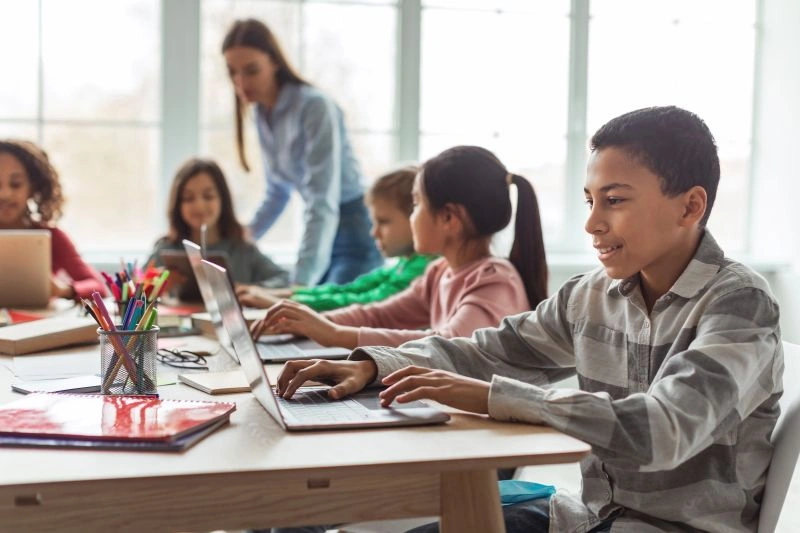
The advantages of collaborative learning—enhanced critical thinking, improved communication, increased engagement, social-emotional development, and exposure to diverse perspectives—make it a valuable instructional approach. However, these benefits don’t emerge automatically just because students sit together. Teachers must implement collaborative learning thoughtfully using proven strategies.
Successful implementation requires attention to group formation, clear objectives, appropriate scaffolding, well-designed tasks, meaningful assessment, and positive classroom culture. When these elements align, it transforms classrooms into communities where students learn content deeply while developing skills they’ll need throughout their lives.